Robust DC Motor Robust DC Motor

2026 Best Bilingual Motor Suppliers for Global Buyers

Time:2026-10-08 Author:Aria
0%

Choosing the right supplier in 2026 requires more than comparing prices and product photos. Global buyers need dependable performance, clear communication, and evidence that a motor can operate safely in real conditions. This guide introduces leading Bilingual Motor suppliers serving international markets, with attention to engineering capability, factory experience, quality systems, and export reliability. Their product ranges may include DC motors, brushless motors, geared motors, and customized drive solutions for automation, medical equipment, vehicles, and smart appliances.

Details matter. A trustworthy supplier should explain torque curves, voltage tolerance, noise levels, thermal limits, and expected service life. Buyers should also review sample testing, production audits, certifications, packaging methods, and warranty procedures. A bilingual technical team can reduce misunderstandings when discussing drawings, shaft dimensions, connectors, or control parameters. Translation alone is not enough. Practical engineering support matters more.

Real projects are rarely perfect. A supplier may offer strong customization but slower delivery. Another may provide fast production but limited after-sales support. This guide considers those trade-offs instead of presenting a simple winner. Lead times should be checked against actual production capacity, not only promises. Factory visits, video inspections, reference orders, and documented test reports can improve confidence. Still, every buyer should verify current certifications and specifications independently. Market conditions change quickly. The best Bilingual Motor supplier is the one that communicates honestly, meets measurable requirements, and remains accountable after shipment. That standard is demanding, but it protects both performance and long-term purchasing value.
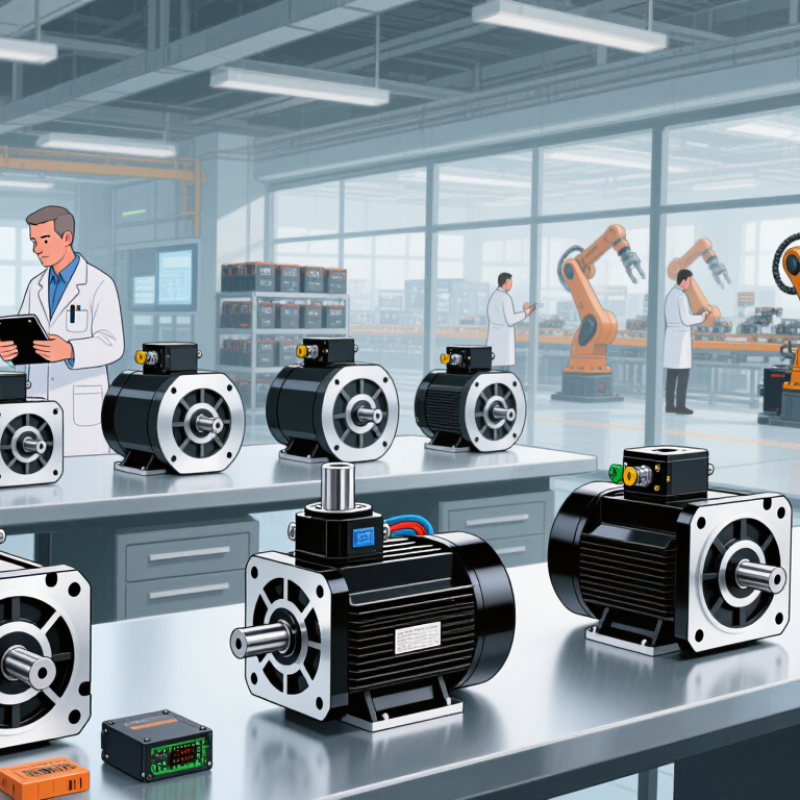
2026 Best Bilingual Motor Suppliers for Global Buyers

2026 Motor Supplier Scope: AC, DC, Servo, and Gear Motors

For global buyers, a bilingual motor supplier must explain performance, not merely translate catalogs. The International Energy Agency estimates motor-driven systems consume about 46% of global electricity. Efficiency data therefore deserves careful checking. The U.S. Department of Energy reports that motor systems use roughly 69% of industrial electricity in the United States. Small specification errors can become expensive energy losses.

AC motors suit pumps, fans, conveyors, and other steady-duty machines. Buyers should request rated efficiency, duty class, insulation class, voltage range, frequency, and thermal limits.

DC motors remain useful where simple speed control and strong starting torque matter. However, brush wear needs a realistic maintenance plan.

Servo motors support accurate positioning, rapid acceleration, and feedback control. Ask for encoder resolution, peak torque, inertia matching, and drive compatibility.

Gear motors add output torque and reduce speed. Their ratio, backlash, lubrication, and radial-load capacity require equal attention.

Reports from the International Electrotechnical Commission and the U.S. DOE emphasize system efficiency, not motor efficiency alone. A highly efficient motor can still waste energy with poor sizing or misaligned transmission. That point is often missed. Suppliers should provide bilingual drawings, test records, certificates, and clear warranty terms. Translation quality matters less than consistent units and definitions. I have seen “rated torque” confused with “peak torque.” It is a costly mistake. Buyers should compare samples under actual load, not only catalog figures, while allowing independent inspection before shipment.

Apply IEC 60034-30-1 Efficiency Classes: IE2, IE3, IE4, and IE5

Global buyers comparing bilingual motor suppliers should treat efficiency classes as a specification, not a sales slogan. IEC 60034-30-1 offers a common framework for classifying motor efficiency within defined product and operating scopes. IE2 is a practical baseline in some markets. IE3 reduces electrical losses further. IE4 demands tighter design and verification. IE5 can deliver exceptional performance, but its availability, technology, and standard coverage require careful checking. Numbers need context. Compare motors at the same rated power, voltage, frequency, pole count, duty, and load. An 11 kW, four-pole motor at 50 Hz is not automatically comparable with a 60 Hz model. Product scope matters.

A reliable supplier should provide a clear bilingual datasheet, efficiency at rated load, loss values, tolerance information, and test references. Ask for evidence. Request reports linked to recognized methods such as IEC 60034-2-1, and check whether an accredited laboratory performed the testing. Confirm the exact IEC 60034-30-1 edition used, especially for IE5 claims. Regional energy rules may set different minimum classes, while inverter operation can change measured system performance. A translated document is not technical proof. In procurement, teams sometimes select IE4 from the label alone, then discover higher drive costs, cooling limits, or uncertain part-load results. That mistake is avoidable, although comparison sheets are not always complete. Suppliers should disclose assumptions, warranty conditions, service access, and expected annual energy savings. Small errors matter. Use measured data before approving the purchase.

Compare 0.12–1,000 kW Motors Across 50/60 Hz Power Systems

2026 Best Bilingual Motor Suppliers for Global Buyers

Compare 0.12–1,000 kW Motors Across 50/60 Hz Power Systems

Selecting motors across 0.12–1,000 kW requires more than comparing price and rated output. The IEA reports that electric motor systems consume roughly half of global electricity. Small efficiency differences can therefore become serious operating costs. Buyers should check rated voltage, frequency, pole count, duty cycle, enclosure, and ambient temperature together.

A 50 Hz motor may run differently on a 60 Hz supply. Speed, torque, current, and cooling can change. For example, a four-pole motor near 1,500 rpm at 50 Hz approaches 1,800 rpm at 60 Hz, before slip. That affects pumps, conveyors, and compressors. IEC 60034-30-1 provides the IE efficiency classification framework, but the label alone does not confirm system performance.

Supplier comparison should include test certificates, efficiency curves, noise data, vibration limits, and documented quality controls. U.S. Department of Energy motor-system guidance shows that system-level improvements can deliver meaningful energy savings, especially when drives and load profiles are assessed together. Still, a neat spreadsheet can mislead. Catalog data may reflect ideal conditions. Ask for test conditions and regional service capability. Frequency compatibility is not a minor checkbox. It is where many otherwise careful selections become expensive.

Verify ISO 9001, CE, UL, RoHS, and IP Protection Compliance

2026 Best Bilingual Motor Suppliers for Global Buyers

For global buyers, compliance should be checked before price negotiations. The ISO Survey 2023 recorded about 1.26 million ISO 9001 certificates worldwide. That number shows broad adoption, not automatic quality. Ask for the certificate scope, issuing body, expiry date, and exact production site. A supplier’s bilingual team should explain these details clearly, without hiding behind technical translations.

CE marking needs a valid EU Declaration of Conformity and supporting test evidence. UL recognition or certification should match the motor model, construction, and intended market. RoHS verification should include material declarations or laboratory results, not only a simple website statement. Check revision dates. Old documents create real purchasing risks.

IP protection also deserves practical attention. Under IEC 60529, an IP65 motor resists dust and water jets, but it is not designed for immersion. Confirm the tested enclosure, cable entry, shaft seal, and installation position. The IEA has reported that motor systems consume roughly half of global electricity, so efficiency and reliability affect operating costs at scale. However, supplier claims can still be incomplete. We have seen correct certificates paired with outdated drawings. Request sample labels, inspection records, and a model-specific test report. Then compare them with the delivered motor. Small gaps matter.

2026 Best Bilingual Motor Suppliers for Global Buyers - Verify ISO 9001, CE, UL, RoHS, and IP Protection Compliance

Anonymous supplier comparison framework with compliance evidence requirements for international purchasing.

Anonymous Supplier Profile Primary Motor Categories Typical Buyer Applications Bilingual Documentation ISO 9001 Evidence to Request CE Compliance Evidence UL / North America Evidence RoHS Evidence IP Protection Verification Buyer Verification Status
Profile 01 Small brushed DC motors; miniature gear motors Medical instruments, smart locks, compact appliances, valves English and Chinese datasheets; wiring diagrams; installation notes Current certificate, certification scope, issuing body, site address, expiry date EU Declaration of Conformity and applicable technical standards; CE marking on finished product where required UL certification or recognition applicable to the exact motor, component, or end product; file reference where applicable Material declarations and test reports covering restricted substances under the applicable RoHS regime IP test report identifying standard, test level, sample, date, and exact model Verify before purchase
Profile 02 Brushless DC motors; integrated controller motors Fans, pumps, robotics, AGV systems, laboratory equipment English and Chinese specifications; controller parameter tables; CAN or RS-485 communication notes Certificate validity, manufacturing location, scope covering design or production activities, audit status Declaration of Conformity, EMC and electrical-safety assessment, risk documentation, and technical file availability Evidence must match the motor-controller assembly and intended voltage; do not treat a generic UL certificate as product approval Supplier declaration supported by homogeneous-material data or laboratory analysis where required Confirm whether the rating applies to the motor alone, connector, controller, or complete assembly Verify before purchase
Profile 03 AC induction motors; single-phase and three-phase motors Industrial fans, conveyors, compressors, machine tools, material handling English and Chinese motor nameplates; performance curves; terminal and mounting drawings Certificate and scope must cover the relevant production site; confirm serial-number traceability and corrective-action process EU Declaration of Conformity and applicable low-voltage, EMC, machinery, and ecodesign requirements based on the installation Check the exact frame size, insulation system, temperature rating, and intended market against the applicable UL category Request current material compliance documentation for windings, insulation, coatings, cables, and terminals Common enclosure ratings include IP54, IP55, and IP65; verify the exact rating through a valid test report Verify before purchase
Profile 04 Servo motors; encoder-equipped synchronous motors CNC equipment, packaging machinery, pick-and-place systems, precision automation English and Chinese servo manuals; tuning instructions; encoder pinouts; alarm-code tables Verify certificate scope for design, assembly, testing, and change control; review audit and nonconformance records when available Confirm EMC, safety, and machinery-system responsibilities between motor, drive, cable, and machine integrator Request evidence for the complete motor-drive combination when the North American installation requires it Obtain declarations for magnets, resins, cable jackets, connectors, and other homogeneous materials Confirm shaft-seal, connector, and cable-entry protection; the lowest-rated component can limit the assembly rating Verify before purchase
Profile 05 Water-resistant motors; pump and outdoor-drive motors Water pumps, outdoor equipment, agricultural machinery, cleaning systems English and Chinese installation guides; sealing instructions; maintenance schedules; safety labels Check the manufacturing site, certificate validity, scope, and quality-management process for sealing and final inspection Confirm the applicable EU product legislation and retain the Declaration of Conformity for the exact model Verify enclosure, wiring, grounding, and thermal-protection requirements for the target North American application Request up-to-date declarations for metals, plastics, elastomers, lubricants, and electronic components IP65 indicates dust-tight protection and protection against water jets under specified test conditions; it does not automatically mean immersion suitability Verify before purchase
Important verification note: ISO 9001 confirms a quality-management system, not automatic product quality. CE is generally a manufacturer's declaration of conformity where applicable, while UL evidence must match the exact product, construction, and intended market. IP ratings must be supported by testing to the applicable enclosure-protection standard and exact model configuration.

Rank Bilingual Suppliers by Data Sheets, Lead Times, Warranty, and Support

2026 Best Bilingual Motor Suppliers for Global Buyers

A reliable supplier ranking should begin with evidence, not polished sales language. Check bilingual data sheets for torque curves, voltage ranges, efficiency figures, insulation class, and mounting dimensions. Missing values deserve caution. A clear document often reveals more than a confident quotation.

Lead time is practical proof of operational control. Compare standard production time, sample availability, packaging details, and shipment milestones. A supplier promising seven days may still need three weeks for testing. Warranty terms should state coverage periods, exclusions, replacement procedures, and response times. Support matters after delivery. Test it before ordering by sending technical questions in both languages. Measure reply quality, not only speed.

Tips: Request one signed datasheet, one sample timeline, and one warranty case example. Ask whether technical support remains available after payment. Keep written records. No ranking is flawless. A supplier may score well on documentation but perform poorly during a rushed production change. Recheck references, inspect sample labeling, and confirm whether specifications match the actual motor. Small details matter. A bilingual team can prevent costly misunderstandings, but only when its translations remain technically accurate.

FAQS

What do IE2, IE3, IE4, and IE5 mean?

They are motor efficiency classes under IEC 60034-30-1. IE2 is a practical baseline. IE3 reduces electrical losses. IE4 requires tighter design and verification. IE5 may offer exceptional performance, but its coverage and availability need confirmation.

How should buyers compare motor efficiency?

Compare motors with the same power, voltage, frequency, pole count, duty, and load. An 11 kW motor at 50 Hz is not automatically comparable with a 60 Hz model. Numbers need context.

Does a 50 Hz motor work the same way at 60 Hz?

Not always. Speed, torque, current, and cooling can change. A four-pole motor near 1,500 rpm at 50 Hz approaches 1,800 rpm at 60 Hz, before slip. That difference can affect pumps and conveyors.

What technical documents should a supplier provide?

Request a bilingual datasheet, rated-load efficiency, loss values, tolerance information, and test references. Check torque curves, insulation class, mounting dimensions, noise, and vibration limits. Missing values deserve caution.

How can buyers verify claimed efficiency?

Ask for reports linked to recognized testing methods, such as IEC 60034-2-1. Confirm the exact IEC 60034-30-1 edition. Check whether an accredited laboratory performed the test. A translated document is not technical proof.

Can an efficient motor increase the total project cost?

Yes. A higher efficiency class may require different drive settings, cooling arrangements, or installation space. Buyers sometimes choose IE4 from the label alone. Later, drive costs or part-load results become uncomfortable surprises.

What should buyers check when comparing 0.12–1,000 kW motors?

Check voltage, frequency, pole count, duty cycle, enclosure, and ambient temperature. Review the motor with its drive and actual load profile. A neat spreadsheet can still mislead.

How should bilingual suppliers be evaluated?

Compare data quality, lead times, warranty terms, and technical support. Request one signed datasheet, one sample timeline, and one warranty case example. Test support with technical questions in both languages.

What warranty and delivery details matter?

Confirm coverage periods, exclusions, replacement procedures, response times, packaging, testing, and shipment milestones. A promised seven-day production time may still require three weeks for testing. Written records help.

Is any supplier ranking completely reliable?

No ranking is flawless. A supplier may document specifications well but struggle during a rushed production change. Recheck references, inspect sample labels, and confirm the delivered motor matches the approved specification.

Conclusion

This guide evaluates the 2026 market for Bilingual Motor suppliers serving global buyers across AC, DC, servo, and gear motor categories. It explains how to compare products from 0.12 to 1,000 kW under both 50 Hz and 60 Hz power systems, while applying IEC 60034-30-1 efficiency classes, including IE2, IE3, IE4, and IE5. Buyers can use these criteria to match motor performance, energy efficiency, voltage requirements, installation conditions, and application needs.

The comparison also highlights practical supplier qualifications, such as ISO 9001 quality management, CE and UL documentation, RoHS compliance, and suitable IP protection ratings. Suppliers are assessed by the clarity and completeness of their data sheets, production and delivery lead times, warranty terms, technical support, and communication quality in multiple languages. This approach helps international purchasers identify reliable partners and select compliant, efficient, and properly supported motor solutions for diverse industrial projects.

Aria

Aria

Aria is a dedicated marketing professional with a deep passion for innovative strategies and a keen understanding of our company's product offerings. With a wealth of experience in the industry, Aria excels at crafting engaging content that highlights the unique features and benefits of our......